Система пастеризации, способная обрабатывать 250 литров воды за цикл.
Система опрыскивания, поддерживающая от 1 до 20 распылительных деревьев, каждое с 6 ярусами, работающими одновременно.



Текущее производство грибов в Индии достигло примерно 0,13 млн тонн. Несмотря на благоприятные агроклиматические условия, обилие агроотходов, богатое грибное биоразнообразие и относительно дешёвую рабочую силу, в Индии наблюдается слабый рост производства грибов (около 4,3% в период 2010–2017 гг.). Два основных фактора, сдерживающих рост индийской грибной индустрии, — это нехватка качественного, недорогого и высокоэффективного оборудования для выращивания грибов, а также высокая зависимость от ручного труда. Эти препятствия не только негативно влияют на качество и объёмы производства грибов, но и создают нестабильность на рынке, снижая уровень потребления. Более того, для мелких производителей экономически невыгодно импортировать оборудование для грибоводства, чтобы удовлетворить растущий спрос на продукцию.




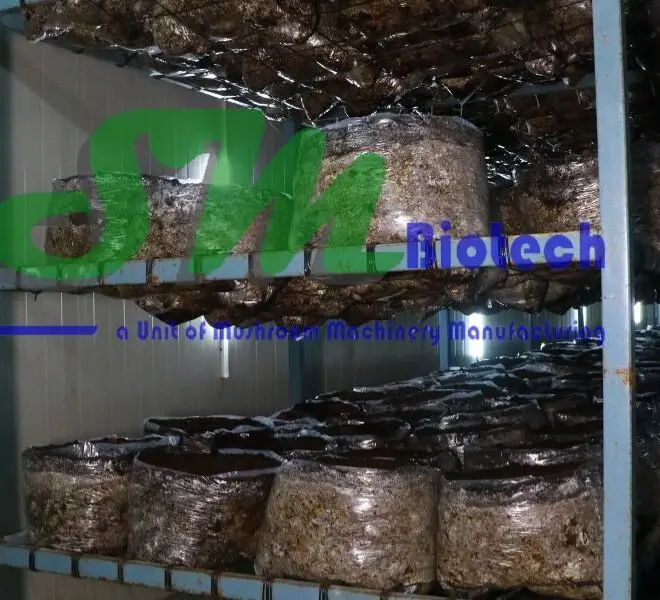


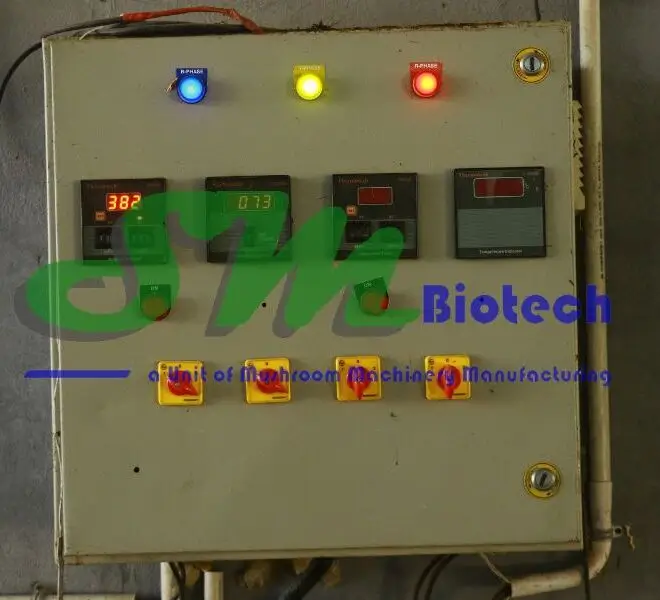
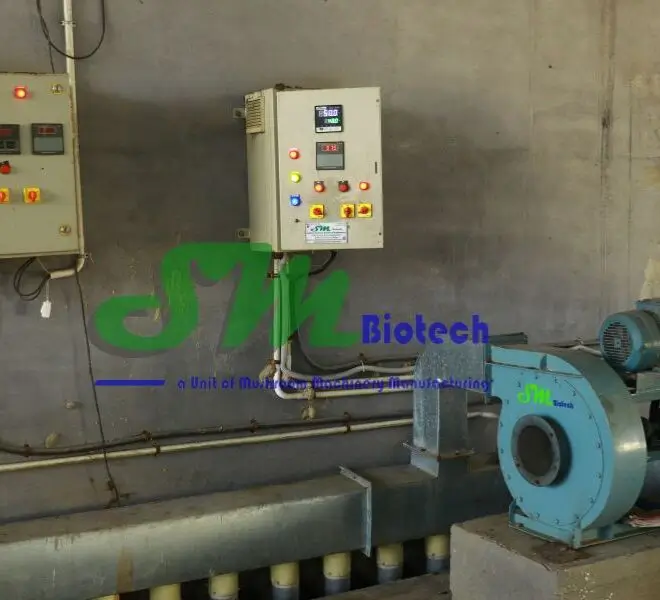
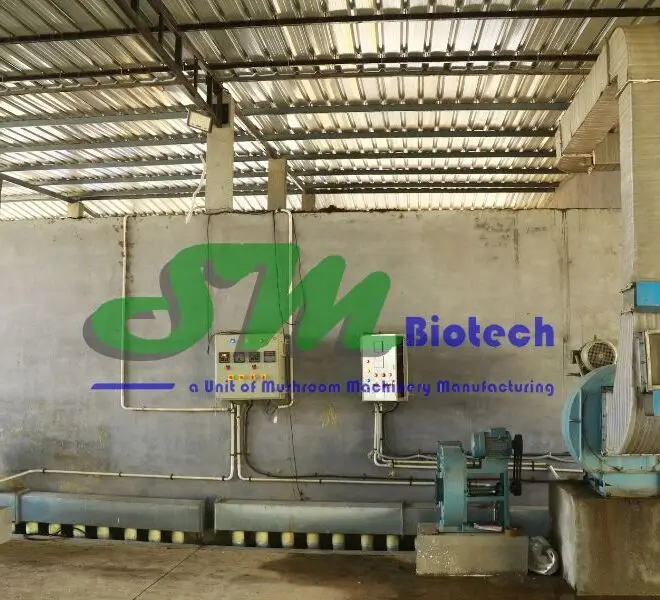
Значение
Функции
Используется в автоматическом и полуавтоматическом режимах для всех видов грибов.
Пастеризация воды.
Кондиционирование воды.
Равномерная система опрыскивания.
Поддерживает стабильный уровень влажности 80–85%.
Преимущества
Исключает необходимость дорогостоящих установок очистки воды RO.
Потребляет меньше электроэнергии, обеспечивая минимальные эксплуатационные расходы за цикл.
Материалы и компоненты